_tif.png)

Forest, Muskeg, and Coast: Understanding Sitka's Ecosystems

One of the things that makes hiking in Sitka unique is how quickly the landscape changes. On a single trail, you may walk through a dense rainforest, cross an open muskeg, and emerge along the coastline with views of the Pacific Ocean.
To many visitors, these areas can seem like separate environments. In reality, they are closely connected ecosystems that shape the plants, wildlife, and hiking experiences found throughout Southeast Alaska.
The Temperate Rainforest
The density of life that surrounds Sitka often surprises visitors. Here, moisture is the defining force. Moss drapes over branches, ferns emerge from fallen logs, and nearly every surface seems to support some form of life.
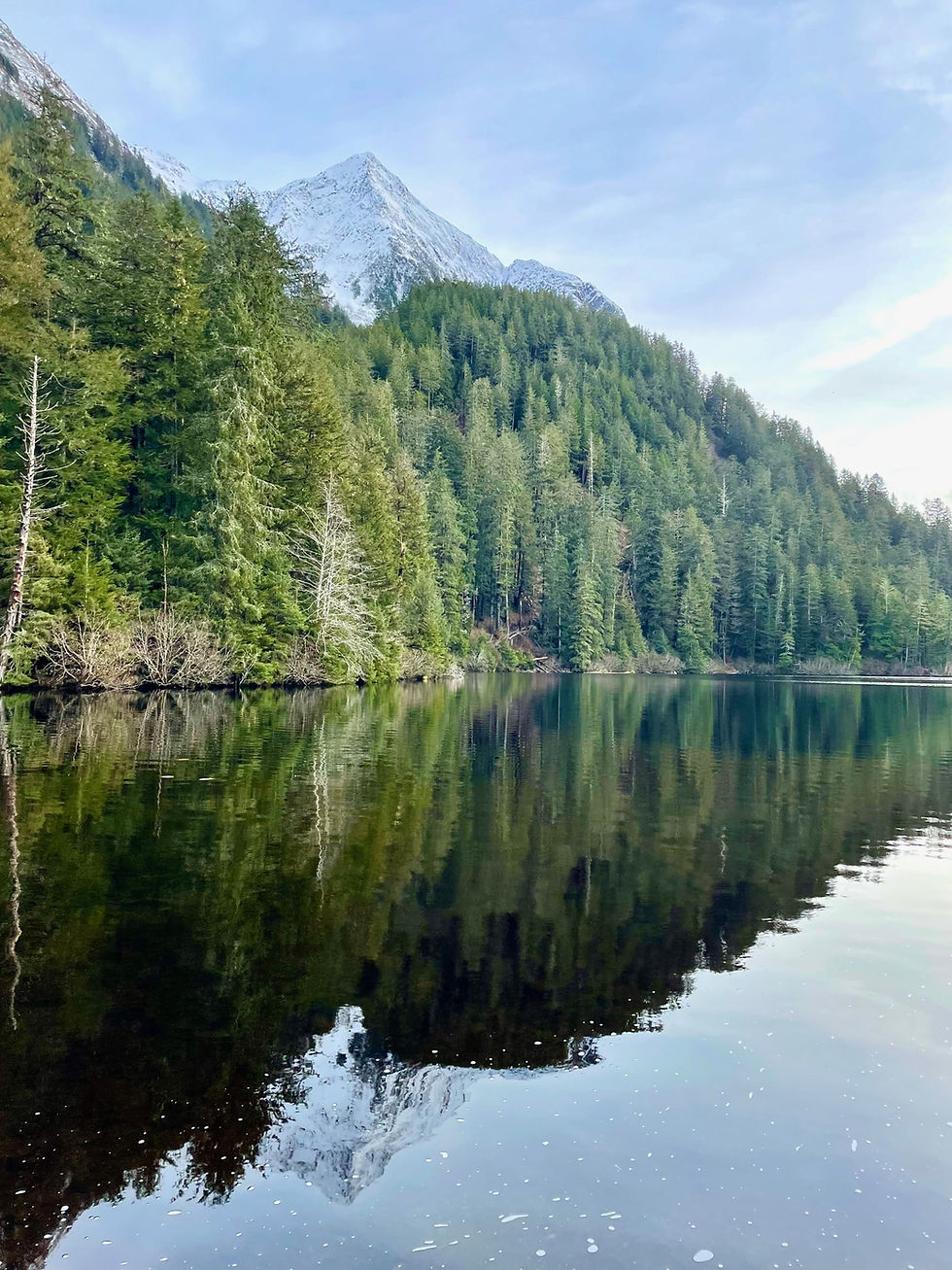
One of the most fascinating features of the Tongass Rainforest is how growth builds upon growth. Fallen trees become nurse logs that support new generations of plants. Lichens and mosses colonize branches and trunks, creating habitat for insects and other small organisms. In many places, life exists in layers, with one living community supporting another.
This constant cycling of nutrients is one reason the rainforest remains so productive despite the challenging conditions of Southeast Alaska. Rather than relying on deep, rich soils, much of the forest depends on nutrients being continually recycled through decaying wood, mosses, fungi, and other organisms.
For hikers, the rainforest offers an experience that spans an incredible range of scales. At the macro level, visitors move through one of the largest temperate rainforests on Earth, surrounded by mountains, old-growth forests, and vast watersheds that stretch across Southeast Alaska. At the micro level, an entire world exists on a single fallen log, where fungi, mosses, insects, and young plants interact in ways that sustain the larger ecosystem. One of the unique rewards of hiking in Sitka is the opportunity to appreciate both perspectives at once, the immense landscape that defines the region and the small details that reveal how it all works together.
The Muskeg
One of the most surprising landscapes visitors encounter is the muskeg.
At first glance, a muskeg may look like an open meadow, but it is actually a wetland ecosystem formed by poor drainage, acidic soils, and centuries of accumulating organic material.

Because nutrients are limited, trees often remain small and stunted despite being
decades old. Plants that thrive here have adapted to challenging conditions, including bog cranberries, cloudberries, Labrador tea, and a variety of mosses.
The open nature of the muskeg creates a dramatic contrast with the surrounding rainforest. Sunlight reaches the ground more easily, temperatures can feel warmer on clear days, and clients often comment on how it looks like another planet in comparison to the surrounding forest.
The Coastal Environment
Salt spray, tides, and changing weather conditions shape the plants and animals that live along the shoreline. Intertidal zones support sea stars, mussels, anemones, crabs, and countless other marine species. Bald eagles often patrol the shoreline while harbor seals can occasionally be spotted in nearby waters.
The coast also serves as a critical link between marine and terrestrial ecosystems. Salmon returning from the ocean bring marine nutrients into freshwater streams, where they become food for bears, eagles, and even the surrounding forest itself.
This connection between land and sea is one of the defining characteristics of Southeast Alaska.
The Alpine
Above the rainforest, conditions begin to change once again.
Trees become smaller and less common before eventually disappearing altogether. In their place are alpine meadows, rocky slopes, and plants adapted to strong winds, heavy snow, and a short growing season.
The alpine can appear sparse at first, especially compared to the dense rainforest below. Spend a little time there, however, and you begin to notice a different collection of plants and wildlife that have adapted to life at higher elevations.
For hikers, one of the biggest rewards is perspective. From above, it becomes easier to see how the rainforest, muskegs, streams, and coastline fit together across the landscape.
Sitka's Connected Ecosystems
Heading out into nature here is more than just a scenic hike, what makes Sitka remarkable is not any single ecosystem, but the way they interact. The rainforest captures and stores water, the muskeg filters and slows its movement across the landscape, and the coast connects the entire system to the ocean. Wildlife moves between these habitats, nutrients flow through them, and each depends on the others in ways that are not always obvious at first glance.
For hikers, this means every trail tells a larger story and provides a unique experience, but are all pieces of the same interconnected landscape. Understanding these connections transforms a hike from a walk through beautiful scenery into a deeper appreciation of how Southeast Alaska works.


