_tif.png)

What to Wear Hiking in Sitka's Temperate Rainforest

Updated: Jun 17
One of the most common questions visitors ask before heading into the Tongass National Forest is: "What should I wear?"
The answer is often different from what people expect. Many visitors arrive in Sitka prepared for cold weather and are surprised to find relatively mild temperatures. Others see a sunny forecast and assume they can leave their rain gear behind. The reality is that hiking in a temperate rainforest is less about dressing for a specific temperature and more about preparing for moisture, changing conditions, and varying activity levels. Knowing what to wear while hiking in Sitka's temperate rainforest will help you make the most of your time on trail.
Dress for Rain, Not Just Temperature
Sitka's climate is shaped by the surrounding ocean and rainforest. Temperatures are often moderate, but moisture is a constant companion. Even on dry days, trails can be muddy, vegetation may be wet from recent rain, and low clouds or mist can move in quickly.
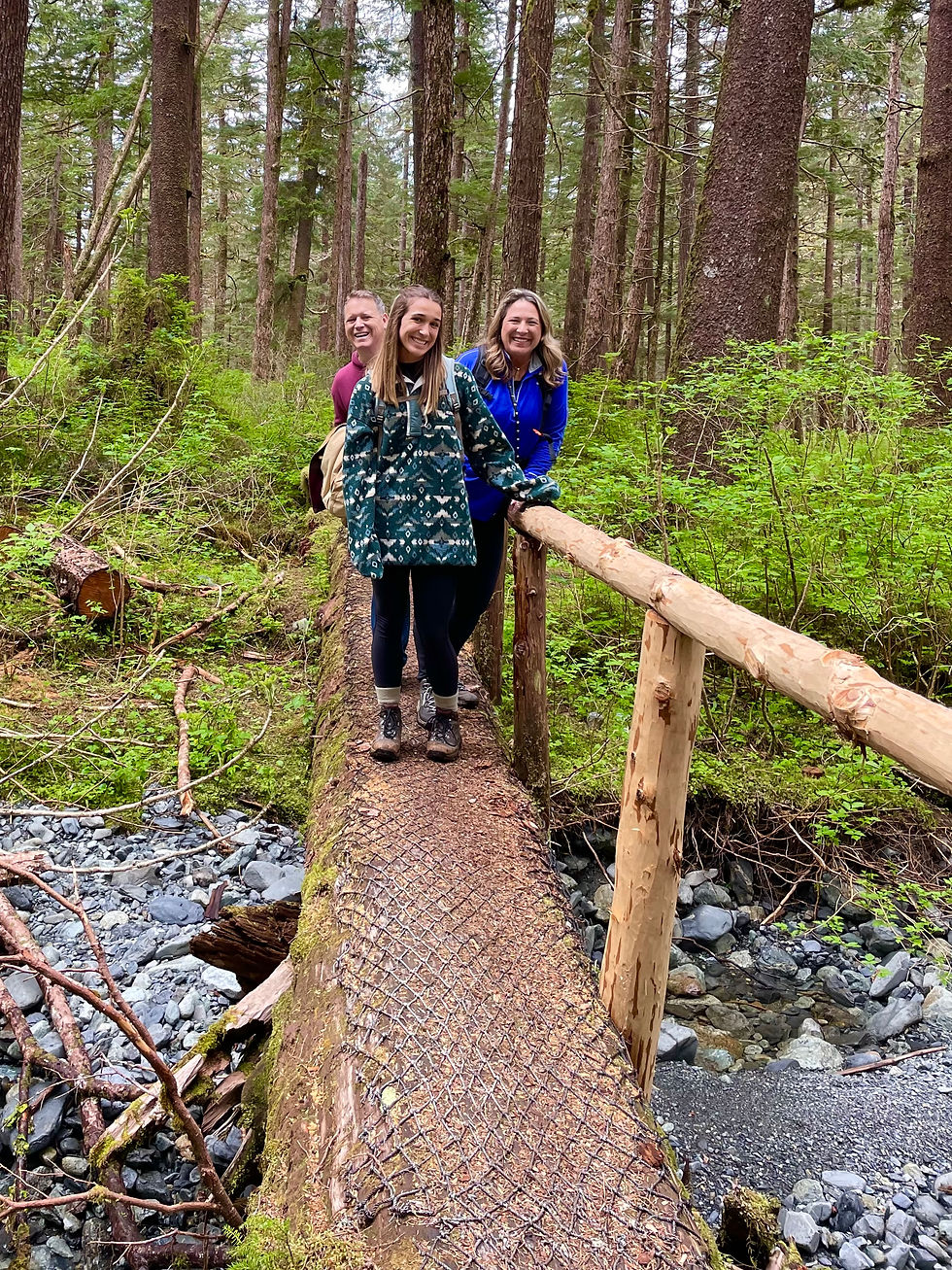
A lightweight waterproof jacket is often one of the most valuable items you can bring. It doesn't need to be heavy, but it should be capable of keeping you comfortable if conditions change.
Layers Work Better Than One Heavy Jacket
Many visitors are surprised to discover they become warm while hiking, even on cooler days and being able to take off and put layers on easily is key.
Instead of relying on a single bulky coat, it's better to wear layers that can be added or removed as conditions change.
A typical layering system includes:
A moisture-wicking base layer
A lightweight insulating layer
A waterproof outer shell
This approach allows you to adjust throughout the day as temperatures, weather, and activity levels change.
Avoid Cotton and Jeans When Possible

Cotton and jeans tends to absorb moisture, dry slowly, and be heavy.
In a rainforest environment, synthetic fabrics or wool are often more comfortable because they continue to insulate and dry more efficiently when exposed to moisture.
This is especially important for socks, which can make a significant difference during longer hikes.
Choose Footwear for Mud and Roots
Rain, moisture, roots, and uneven terrain are all part of the experience. Waterproof or water resistant hiking boots or trail shoes with good traction are often the most comfortable choice. Many visitors find that keeping their feet dry has a bigger impact on comfort than almost any other piece of gear. In addition, being sure to have footwear with good tread is important in this environment.
Don't Forget the Small Things
A few small items can make a surprising difference:
A hat with a brim helps keep rain off your face.
Sunglasses can be useful on brighter days and open viewpoints.
Lightweight gloves can be welcome during cooler months.
Extra socks can be a luxury if conditions become especially wet.
Expect Conditions to Change
One of the joys of hiking in Southeast Alaska is experiencing a landscape that is constantly changing.
Conditions can vary throughout the day. A cool morning may give way to warm sunshine on Harbor Mountain Trail, where rising air and direct sun can make it feel surprisingly warm. Later, while stopping to enjoy a view, or have a snack, you may cool down quickly and find yourself reaching for an extra layer.
It's not uncommon for hikers on the Herring Cove and Beaver Lake Trail to adjust their layers three or four times during a single outing. Between the cool spray from the waterfall, the heat generated on the climb, and the warmer humid air in the muskeg, conditions can feel surprisingly different from one section of the trail to the next.
Being prepared to adjust what you're wearing throughout the hike and to changing weather conditions can make for a much more comfortable and enjoyable experience.
Whether you're exploring the rainforest along Indian River or gaining elevation on Gavan Hill, dressing for moisture, layering effectively, and wearing appropriate footwear will help you get the most out of your time in the Tongass. After all, the rainforest exists because of the rain and being prepared helps make the adventure more comfortable.

